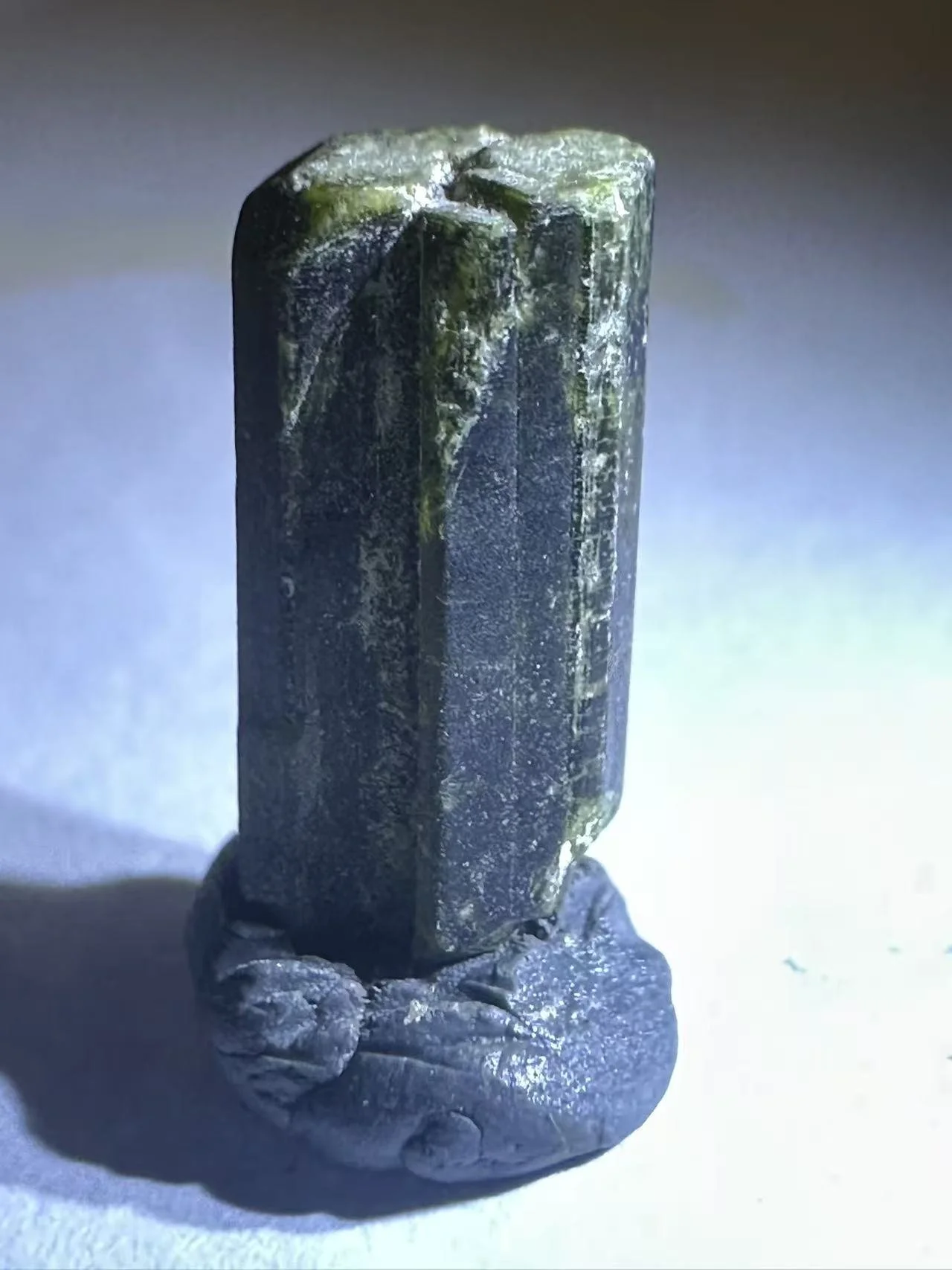
Epidote
Basic Properties of Epidote
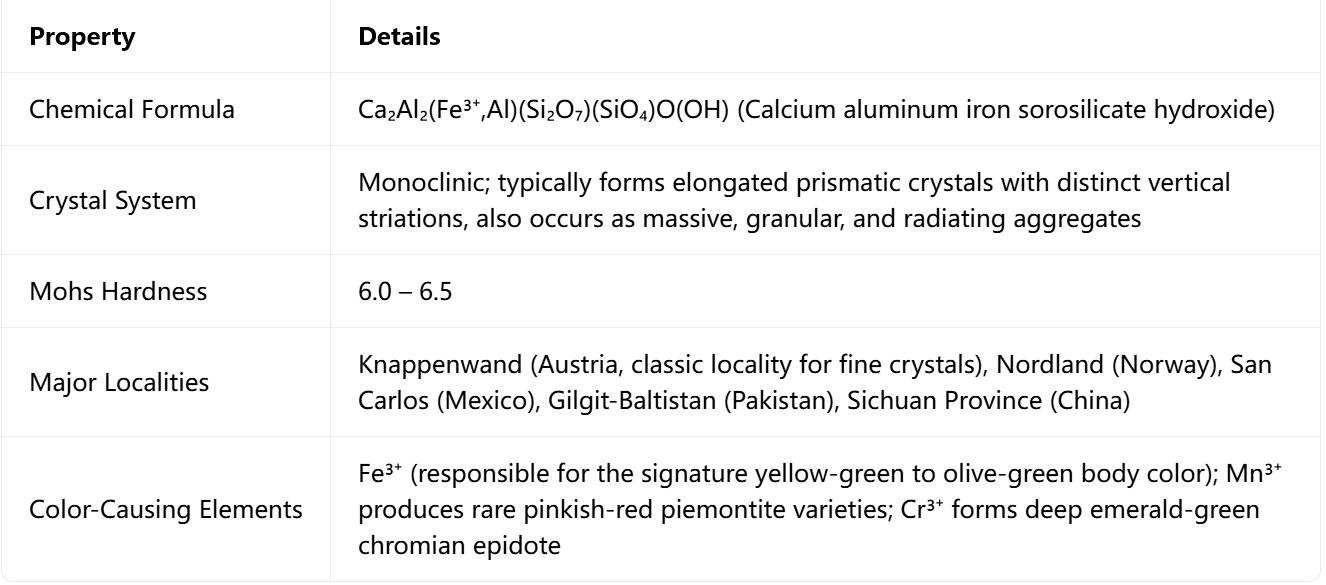
Mineral Characteristics
Epidote is a calcium-rich sorosilicate mineral and the namesake member of the epidote group, which includes clinozoisite, allanite, piemontite and zoisite. It forms primarily through medium-grade regional metamorphism of calcareous sedimentary rocks, and is also a common constituent of contact metamorphic skarns, hydrothermal veins, and altered igneous rocks. As a classic index mineral, its presence and composition are widely used by geologists to estimate the temperature and pressure conditions under which metamorphic rocks formed.
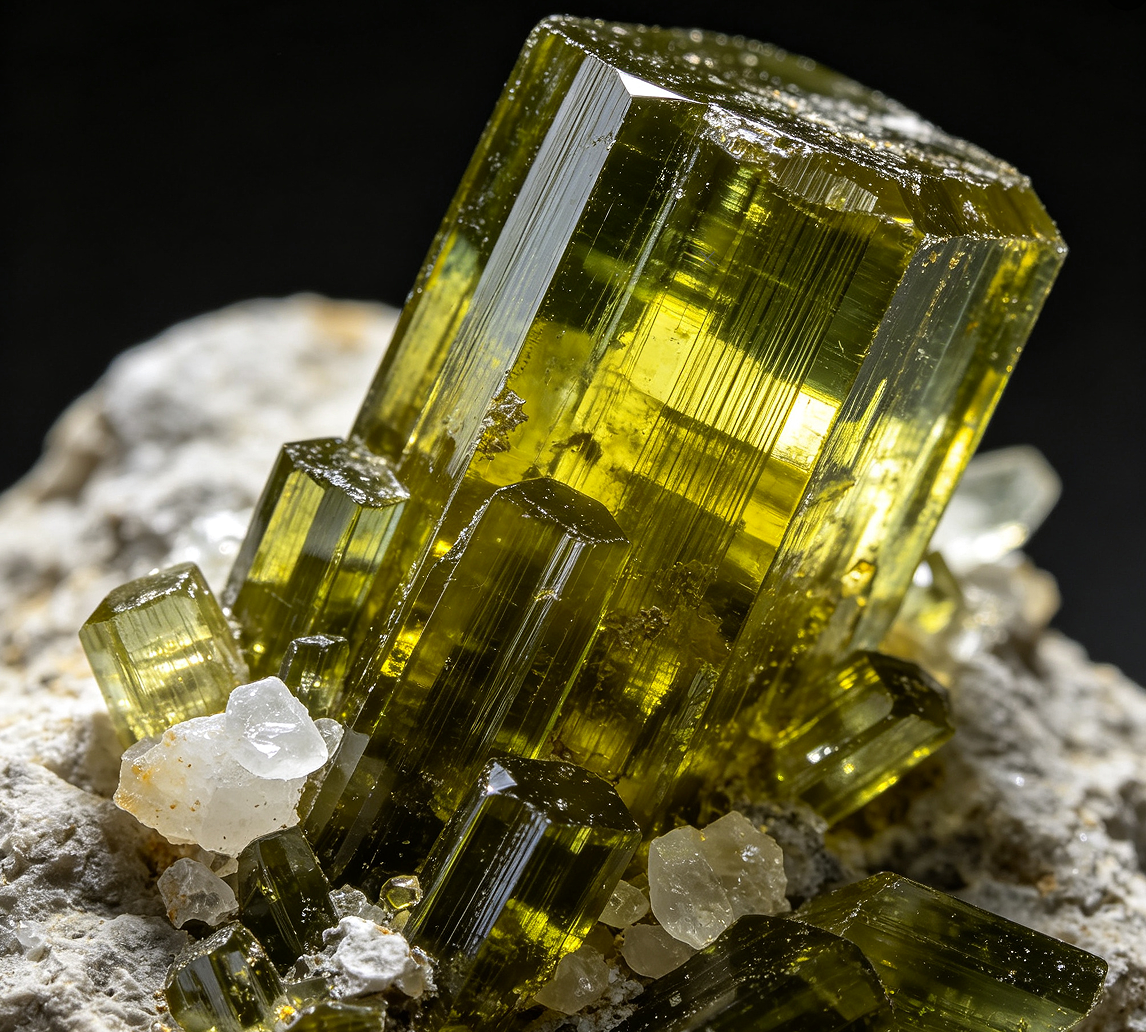
Well-crystallized epidote typically develops as long, prismatic monoclinic crystals marked by prominent parallel striations along the c-axis. It exhibits a vitreous to resinous luster on fresh surfaces, and has one direction of perfect cleavage. Its characteristic color range stems from isomorphous substitution within the crystal lattice: ferric iron (Fe³⁺) replacing aluminum produces the typical pistachio to olive green hues, while increasing iron content deepens the color to forest green. Complete solid solution exists between epidote and its aluminum-rich endmember clinozoisite, creating a continuous spectrum of composition and appearance.
Notable varieties include pistacite, a deeply saturated iron-rich variant named for its pistachio-green color; piemontite, a manganese-bearing pink to reddish-brown type; and chromian epidote, a rare chromium-rich variety with vivid emerald-green coloration. Epidote is frequently associated with quartz, calcite, feldspar, and actinolite, and often forms aesthetic paragenetic specimens highly sought after by mineral collectors.
Gemological & Industrial Applications
In gemology, transparent, deeply colored epidote crystals of high clarity are faceted into collector gemstones. Though its relatively modest hardness limits its use in everyday ring wear, it is popular for pendants, earrings and collector pieces. Chatoyant epidote (epidote cat’s eye) is a rare and valued variety, cut en cabochon to display its sharp silky eye effect. Fine mineral specimens with well-formed crystal habit and classic pistachio-green color command high value in the collector market, particularly those from historic Austrian and Norwegian localities.
Geologically, epidote is one of the most important index minerals for metamorphic petrology. Its compositional sensitivity to pressure and temperature makes it an indispensable tool for reconstructing the tectonic and thermal history of mountain belts and metamorphic terranes. In industrial applications, massive epidote rock is occasionally used as a decorative dimension stone for interior cladding and architectural features. It also has limited use in the ceramic industry and as a minor source of rare earth elements in association with allanite-bearing ores.
Cultural Significance
The name epidote derives from the Greek word epidosis, meaning “increase” or “addition”, a reference to the mineral’s distinctive extra crystal faces that set it apart from other similarly shaped prismatic minerals known to early mineralogists. This naming reflects the systematic observation of crystal morphology that defined the formative era of modern mineralogy in the 18th and 19th centuries.
In traditional and metaphysical cultural contexts, green epidote has long been associated with growth, renewal, and abundance. It has been regarded as a stone of clarity, believed to support focus, memory and emotional balance. Throughout the history of mineral collecting, epidote has held a classic status, with fine cabinet specimens prized by museums and private collectors alike as representative examples of metamorphic mineralogy. In contemporary crystal healing practices, it remains a popular stone linked to personal growth, resilience and positive transformation.