Jadeite Identification Methods
Jadeite identification is a structured gemological practice that integrates macroscopic visual inspection and microscopic feature analysis to assess both authenticity and material quality. The standard methodology follows a two-stage workflow, beginning with naked-eye observation under controlled lighting conditions. This first step establishes a full profile of the stone’s color, luster, transparency, grain texture and structural integrity, while also screening for preliminary indicators of artificial treatment such as acid etching, resin filling and dyeing.
For definitive confirmation of treatment and finer quality grading, examination proceeds to magnified inspection using a 10× gemological loupe. Magnification reveals diagnostic micro-features on the surface and within the stone that are invisible to the naked eye. A foundational principle of the process is the targeted use of reflected and transmitted light: each lighting mode exposes distinct structural and color characteristics, which together form the basis for reliable treatment identification and accurate variety classification.
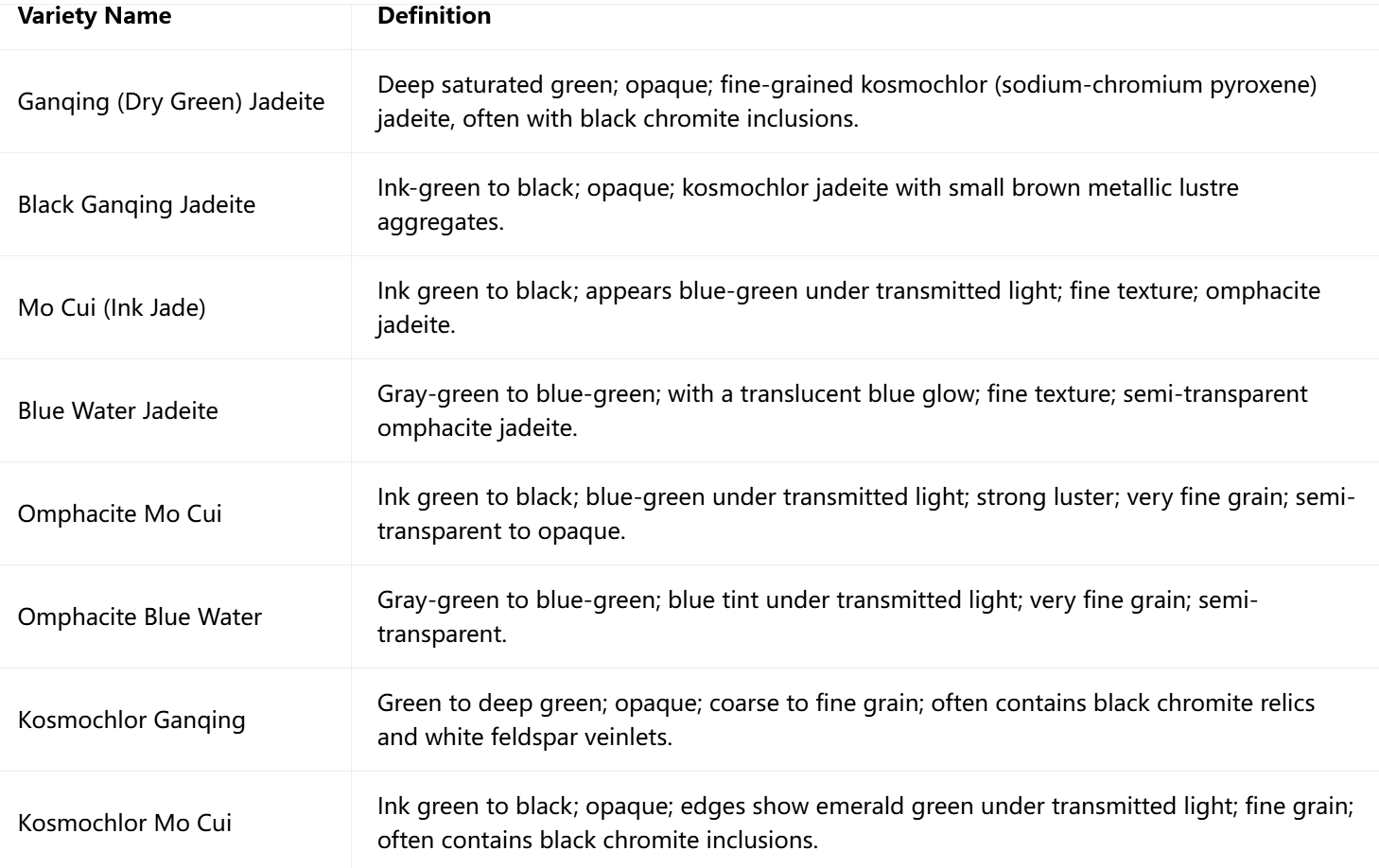
The reference below outlines the complete observation framework, key diagnostic markers, and a full catalog of recognized jadeite varieties.
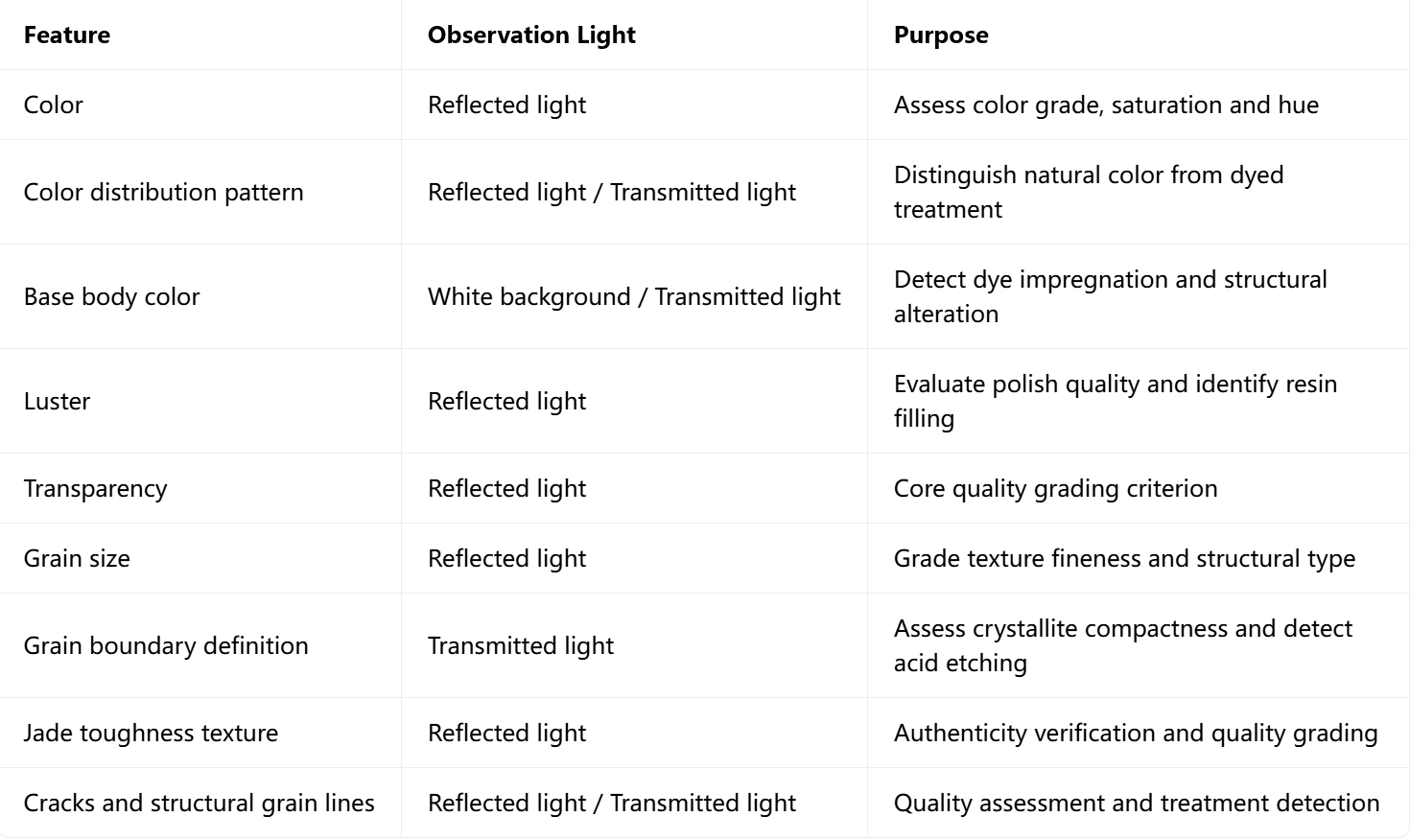
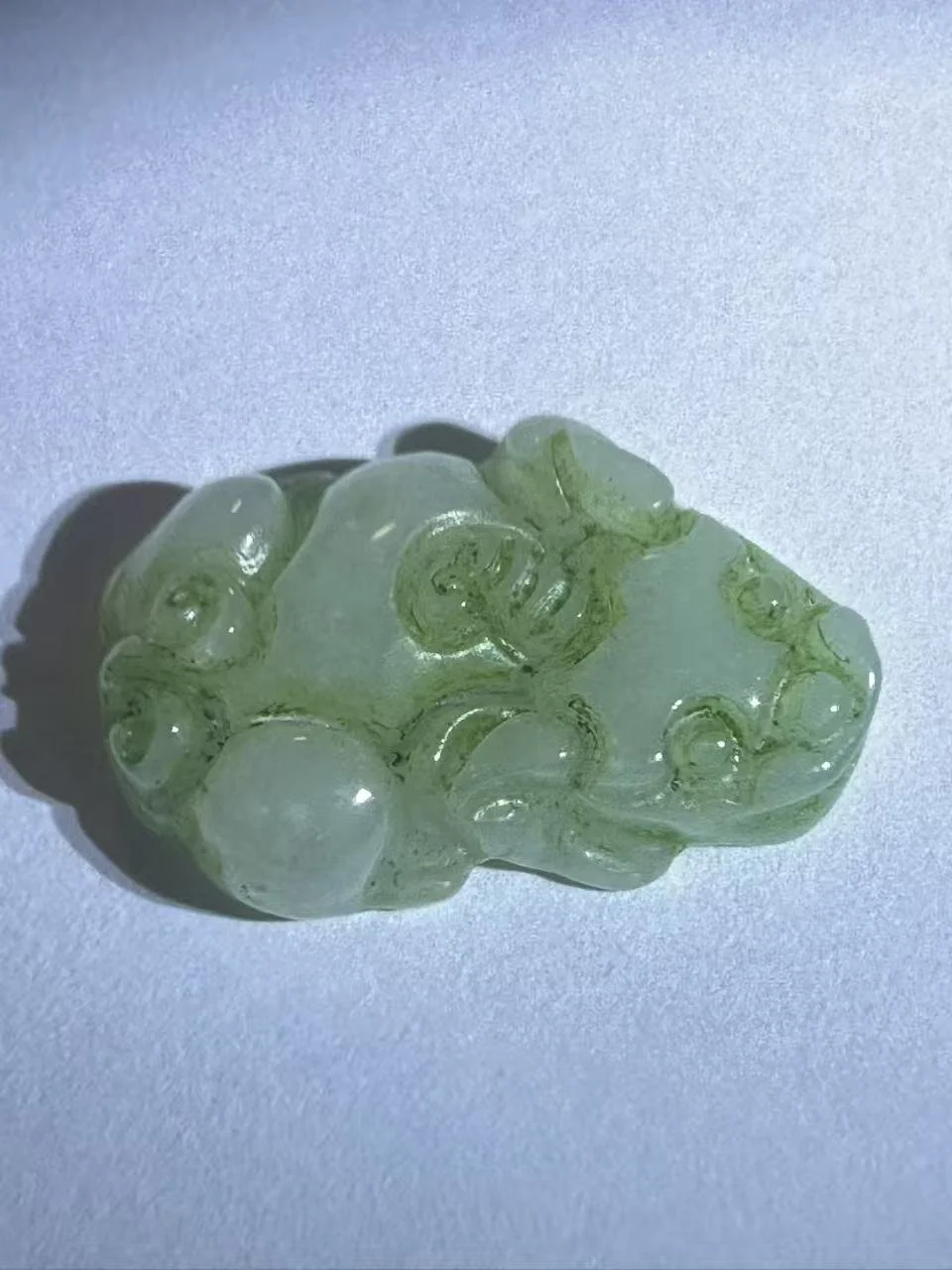
1. Naked-Eye Visual Observation
This is the primary step for jadeite quality grading and preliminary authenticity screening, conducted under standard gemological lighting conditions.
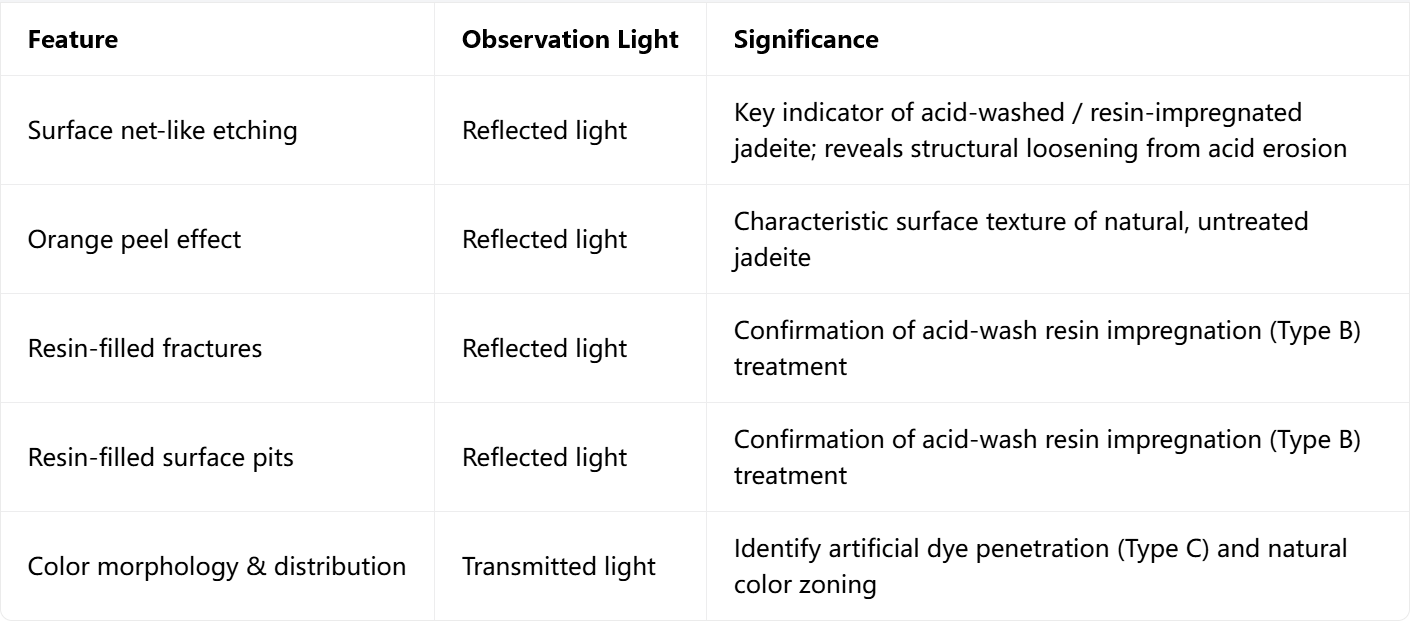
2. Magnified Observation (10× Loupe)
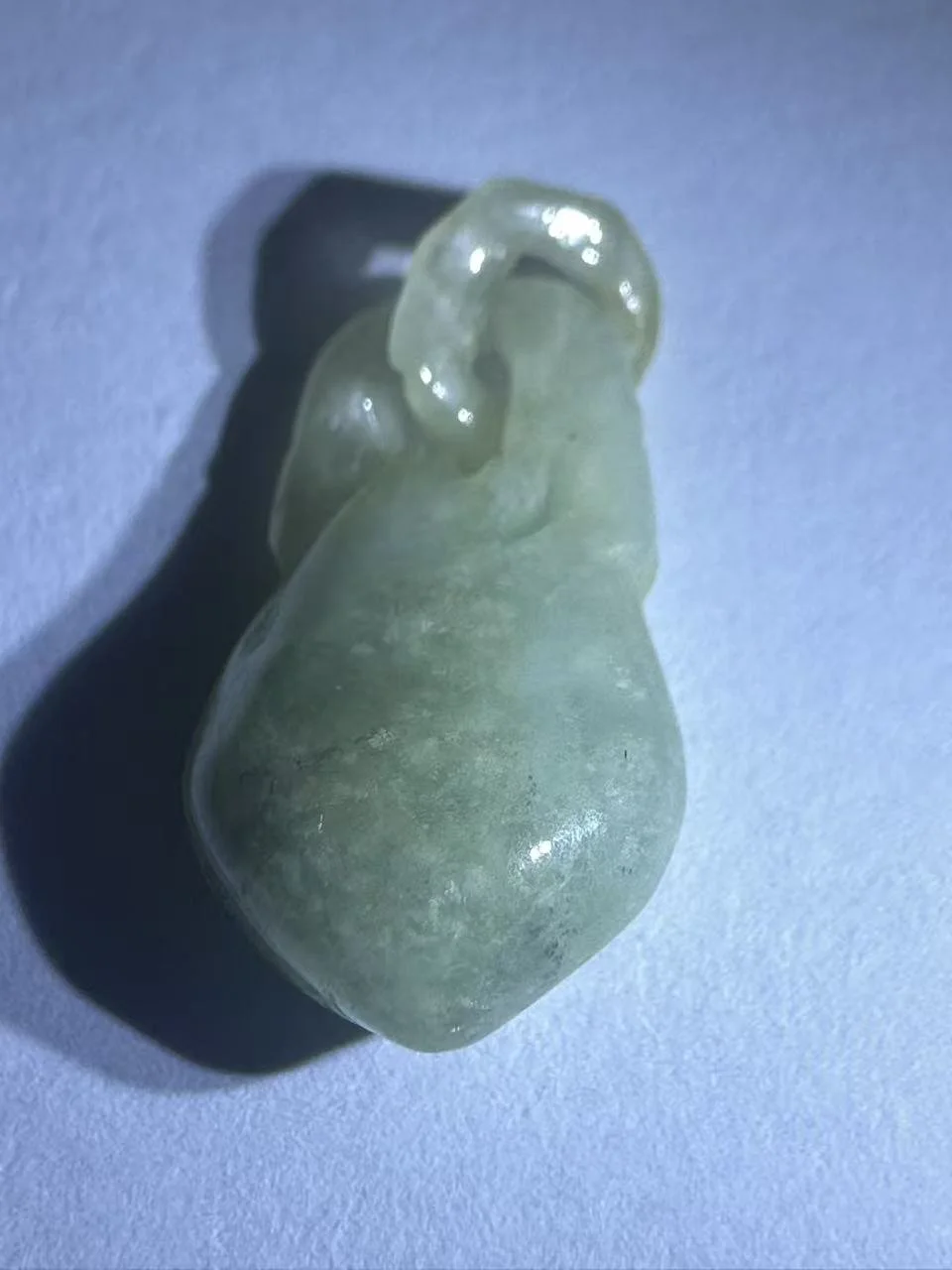
Magnification reveals surface and internal micro-features critical for identifying acid washing, resin impregnation and dye treatment.
Type C Jadeite (Dyed Jadeite)
3. Pyroxene Group Special Varieties
Type B Jadeite (Bleached & Resin-Impregnated Jadeite)