Chalcopyrite
Basic Properties of Chalcopyrite
Mineral Characteristics
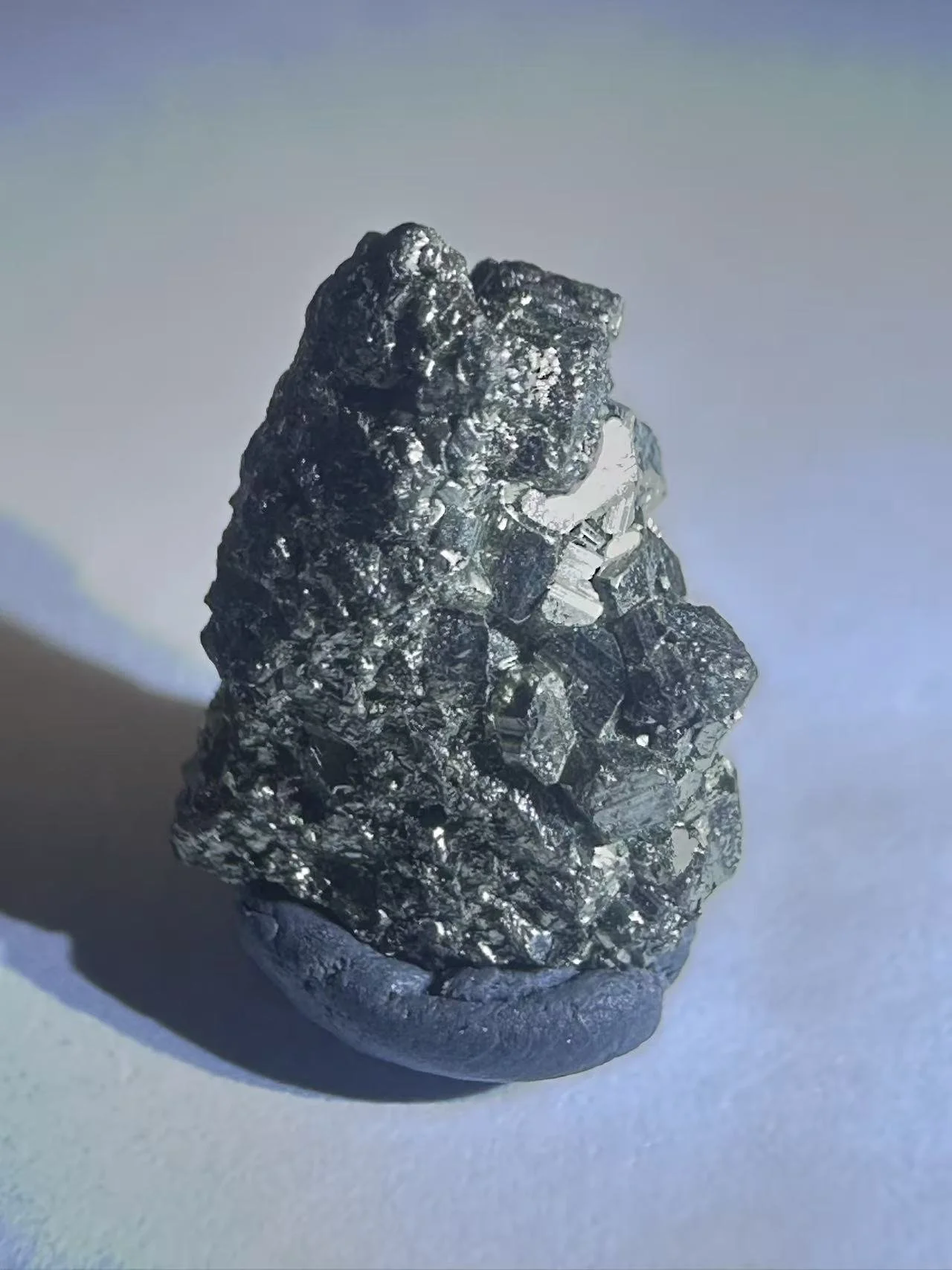
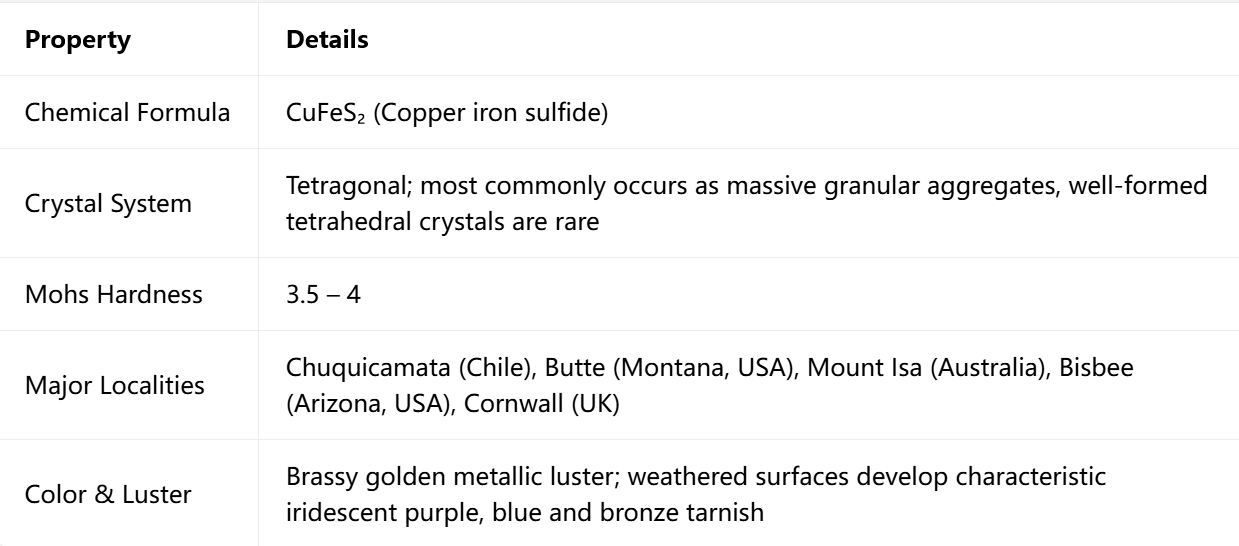
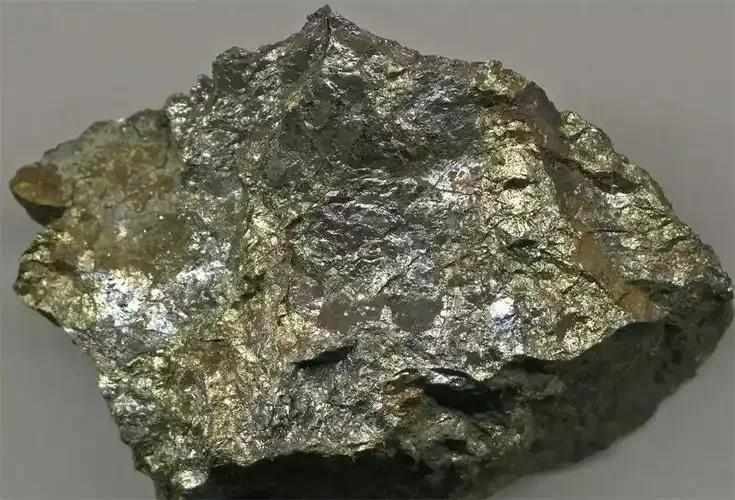
Chalcopyrite is the most economically important copper sulfide mineral and the primary ore source for global copper production. As a member of the sulfide mineral group, it crystallizes in the tetragonal system, though distinct euhedral tetrahedral crystals are relatively uncommon in nature. The vast majority of chalcopyrite occurs as dense massive aggregates, disseminated grains, or vein fillings within host igneous and sedimentary rocks.
Its distinctive brassy-gold metallic sheen frequently causes it to be mistaken for pyrite (“fool’s gold”) or native gold, but it can be reliably distinguished by its lower hardness, deeper golden hue, and the iridescent tarnish film that forms on exposed surfaces. This tarnish, composed of secondary copper sulfides and oxides, produces shimmering peacock-like coloration and is a key diagnostic feature of weathered chalcopyrite specimens.
Chalcopyrite forms across a wide range of geological settings, including porphyry copper deposits, hydrothermal vein systems, contact metamorphic skarns, and sedimentary exhalative deposits. It typically occurs in association with pyrite, sphalerite, galena and quartz, and serves as a critical pathfinder mineral for copper exploration.
Gemological & Industrial Applications
Industrially, chalcopyrite is the backbone of the global copper supply chain, accounting for roughly 70% of total world copper output. Copper refined from chalcopyrite underpins the electrical, electronics, construction, aerospace and renewable energy sectors, making it one of the most strategically vital industrial minerals on Earth.
In mineral collecting and decorative use, well-crystallized chalcopyrite specimens — particularly those with sharp tetrahedral crystal form, vivid iridescent tarnish, or aesthetic paragenesis with quartz, calcite or other collector minerals — are highly prized. It is occasionally polished into decorative cabochons and display pieces, but its low Mohs hardness prevents widespread use in daily-wear jewelry.
Cultural Significance
Chalcopyrite stands as one of the most transformative minerals in human civilization, as the primary ore source that enabled the Bronze Age. The development of copper smelting technology, using chalcopyrite as raw material, allowed societies to transition from stone tool technology to bronze metallurgy, revolutionizing agriculture, warfare, craftsmanship and social complexity across every inhabited continent.
Across ancient cultures, copper extracted from chalcopyrite was fashioned into ritual vessels, ornamental artifacts, tools and early forms of currency, from Mesopotamian cuneiform-era copper ingots to Shang Dynasty bronze ritual vessels and pre-Columbian Mesoamerican copper ornaments. In modern mineralogical culture, chalcopyrite remains one of the most widely recognized and studied ore minerals, celebrated equally for its global economic importance and its striking, iridescent natural beauty.