Opal
Basic Properties of Opal
Mineral Characteristics
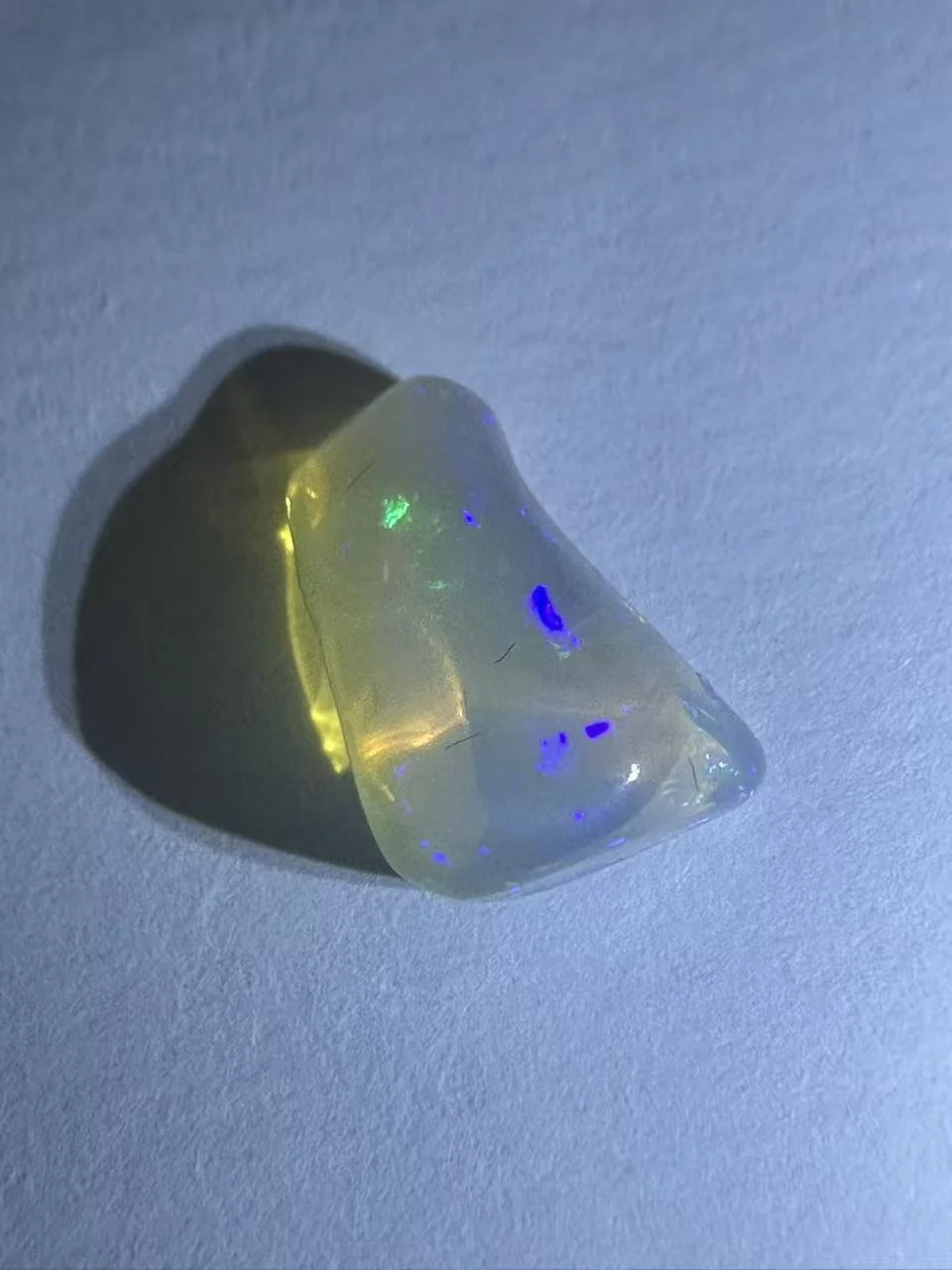
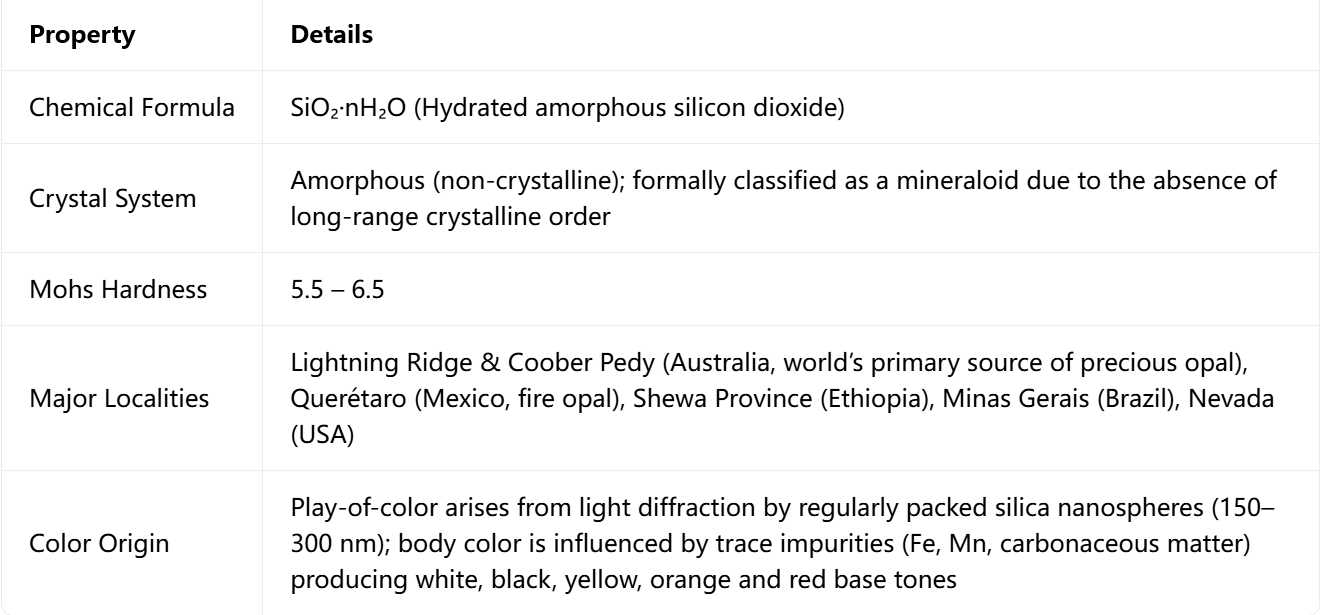
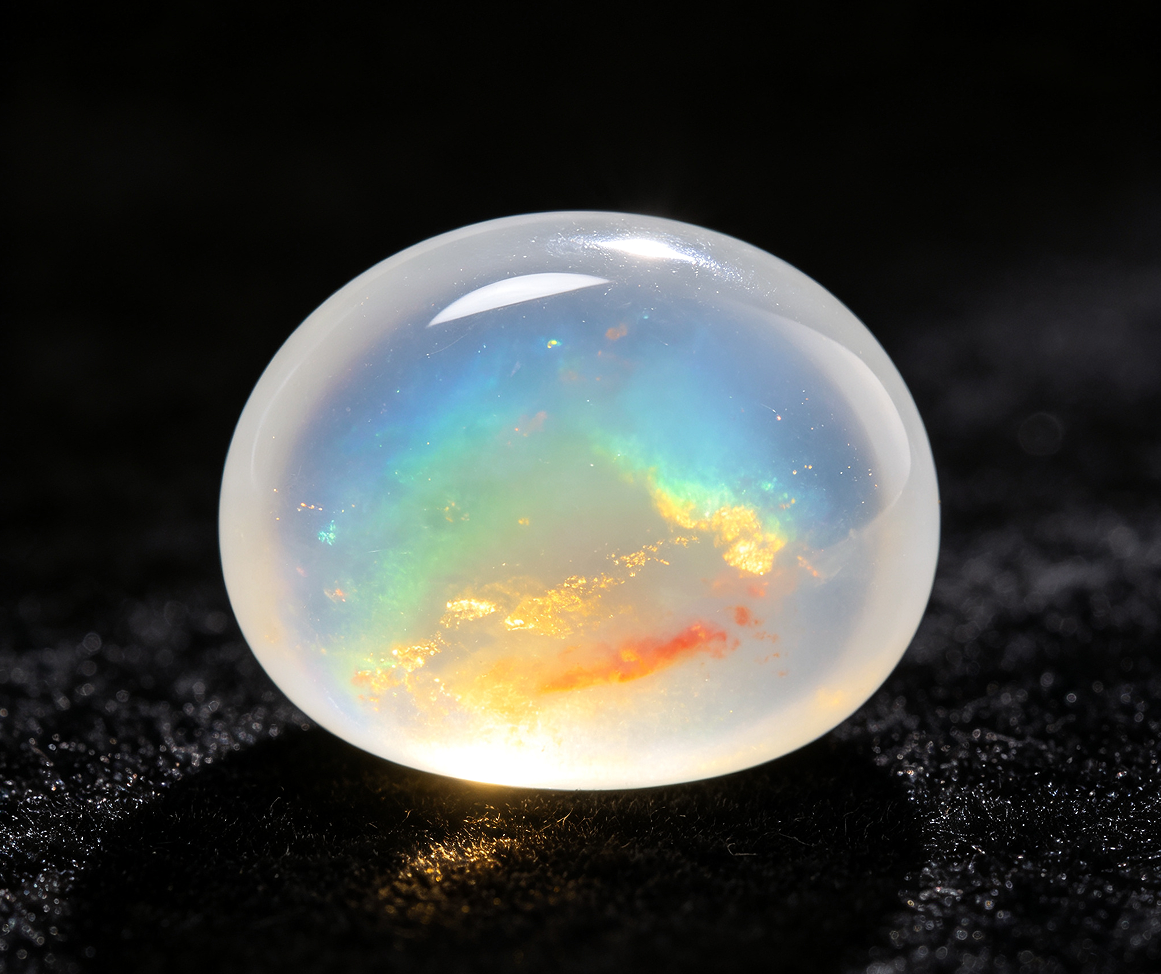
Opal is a hydrated form of amorphous silica, formally categorized as a mineraloid rather than a true crystalline mineral. It is the only gem material in the world that exhibits play-of-color — a dynamic, shifting iridescence of full-spectrum colors that appears as the stone or light source is rotated. This signature optical phenomenon is produced by the diffraction and interference of visible light passing through a precisely ordered three-dimensional lattice of uniformly sized silica nanospheres. The diameter and packing geometry of these spheres directly determine which wavelengths of light are diffracted, and thus the range and intensity of colors displayed.
Gemologically, opal is divided into two fundamental groups: precious opal, which displays distinct play-of-color, and common opal (referred to as potch in the mining industry), which lacks iridescence and occurs in opaque, uniform body colors. Recognized precious opal varieties include black opal (dark gray to black body tone, the rarest and most valuable grade), white opal (milky white base), crystal opal (transparent to translucent body), fire opal (transparent yellow-orange to red body), boulder opal (opals filling natural fractures in ironstone host rock), and matrix opal (opal disseminated within host rock).
Opal forms as a secondary mineral deposited by silica-saturated groundwater in cavities, fractures and pore spaces within sedimentary and volcanic rocks. The world’s largest deposits formed in ancient inland sedimentary basins under arid weathering conditions. Water content varies widely from 3% to 21% by weight, with most gem-quality opal holding between 6% and 10% structural water. This water content makes opal sensitive to extreme heat, dry conditions and sudden temperature changes, which can cause cracking or crazing.
Gemological & Industrial Applications
As a gemstone, precious opal is one of the most distinctive and sought-after colored stones in global jewelry, and is the traditional birthstone for the month of October. It is almost universally cut en cabochon with a smooth, rounded top surface to maximize the visibility of play-of-color. Black opal from Lightning Ridge, Australia commands the highest market premium, as its dark body tone creates maximum contrast and makes the iridescent spectral colors appear exceptionally vivid. Fine crystal opal, high-grade fire opal and artistic boulder opal are also highly valued by collectors and luxury jewelers. Due to its moderate hardness and sensitivity to abrasion and thermal shock, opal is most commonly used in pendants, earrings and brooches, and requires special care for daily wear.
Industrially, biogenic opal — better known as diatomaceous earth, composed of the fossilized silica frustules of microscopic diatoms — has extremely wide-ranging applications. It is used as a high-efficiency filtration medium for water and beverages, a functional filler in paints, plastics, rubber and paper, a mild abrasive in toothpastes and metal polishes, a lightweight thermal insulator, and a soil amendment in horticulture. Massive common opal rock is also cut and polished as a decorative dimension stone for interior cladding, countertops and ornamental carvings.
Cultural Significance
The name opal derives from the Latin opalus, traced back to the Sanskrit word upala meaning “precious stone”, evidence of its recognition and trade along ancient Eurasian routes dating back over 2,000 years. In ancient Rome, opal was celebrated as the queen of gems, believed to embody the colors and virtues of every other gemstone combined, and was associated with hope, purity and protection. Roman naturalist Pliny the Elder wrote of opal as a stone that contained the beauty of all gems in a single stone.
For Indigenous Australian peoples, opal carries profound sacred and cultural meaning. Traditional Dreaming stories describe opals as fragments of the rainbow that fell to earth, bridging the physical and spiritual worlds. To this day, opal remains a defining national icon of Australia and a core part of its cultural and geological heritage.
In medieval Europe, opal was regarded as a stone of foresight, emotional healing and truth. An unfounded 19th-century literary superstition briefly linked opal to misfortune, a myth that has long been discredited in modern gemology. Today, opal is universally embraced as the October birthstone, symbolizing creativity, joy, loyalty and emotional balance, celebrated for its unmatched ability to capture every color of the light spectrum within a single stone.