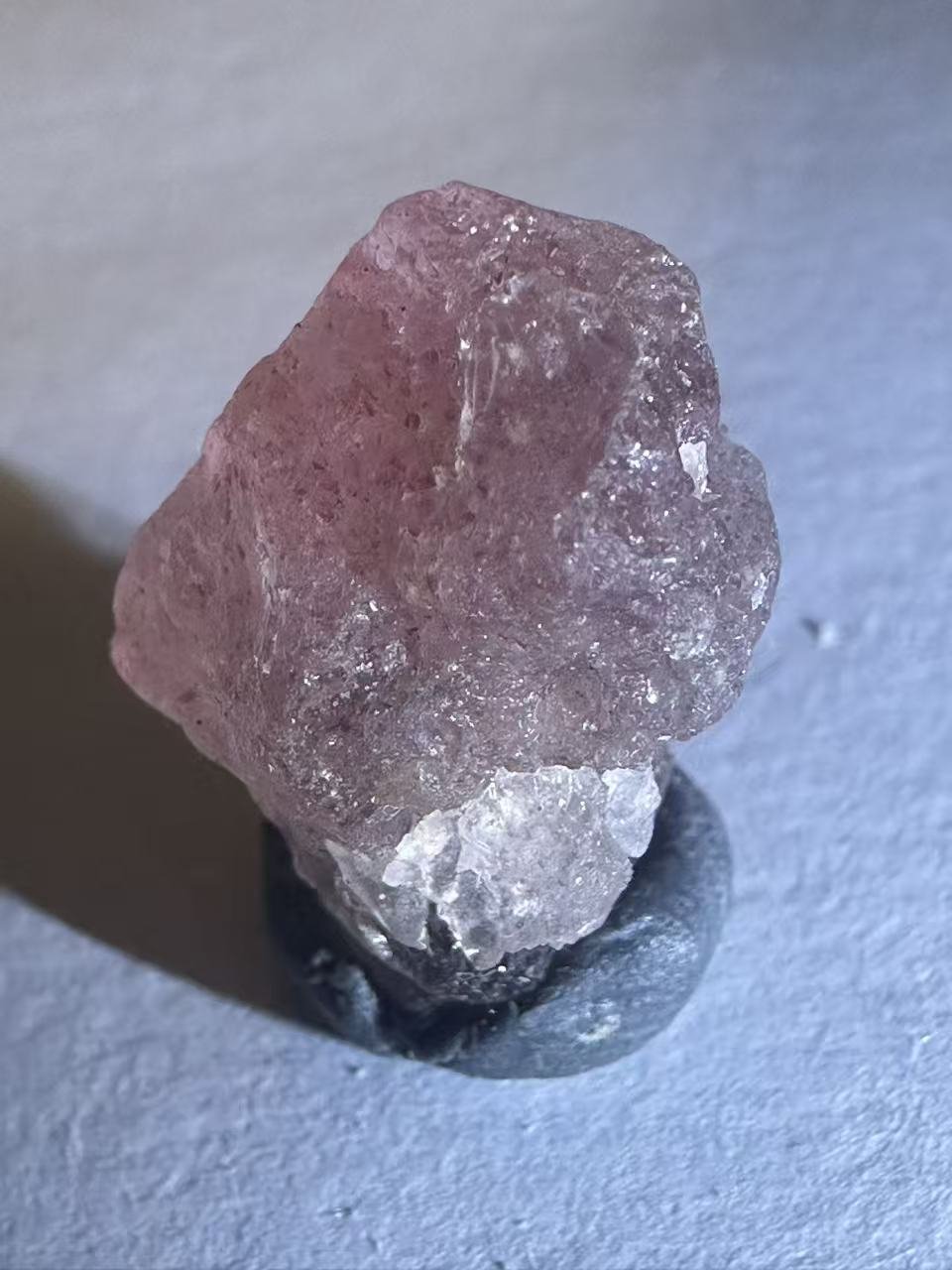
Strawberry Quartz
Basic Properties of Strawberry Quartz
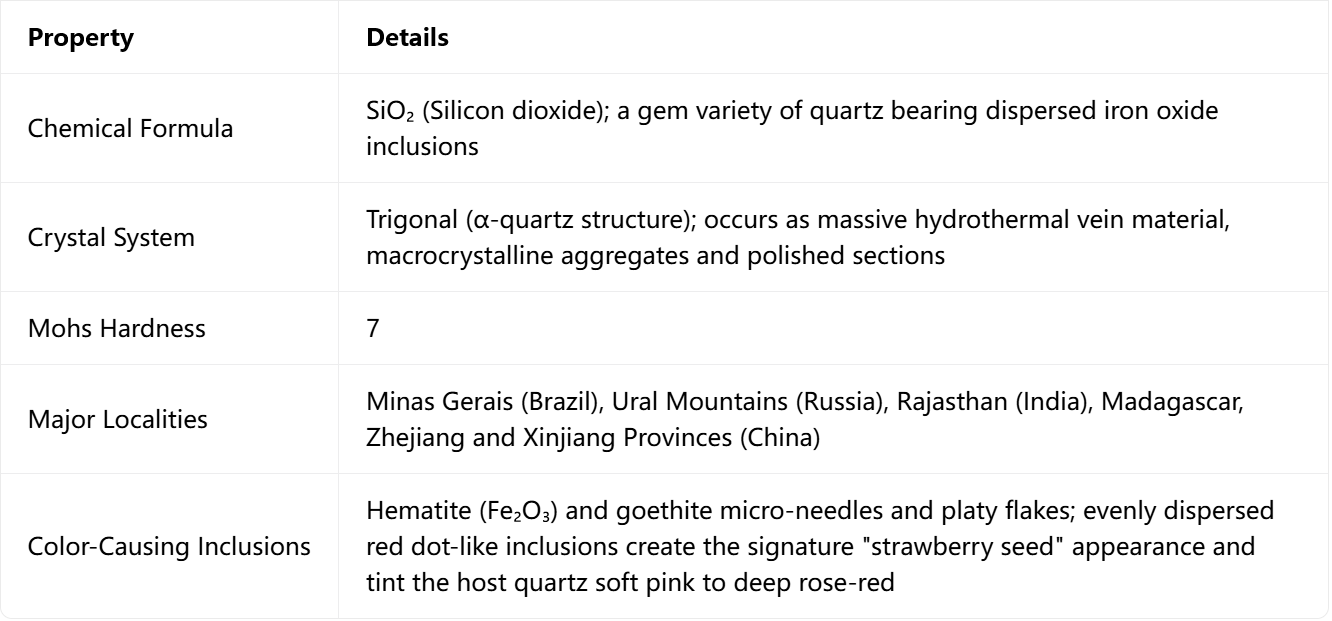
Mineral Characteristics
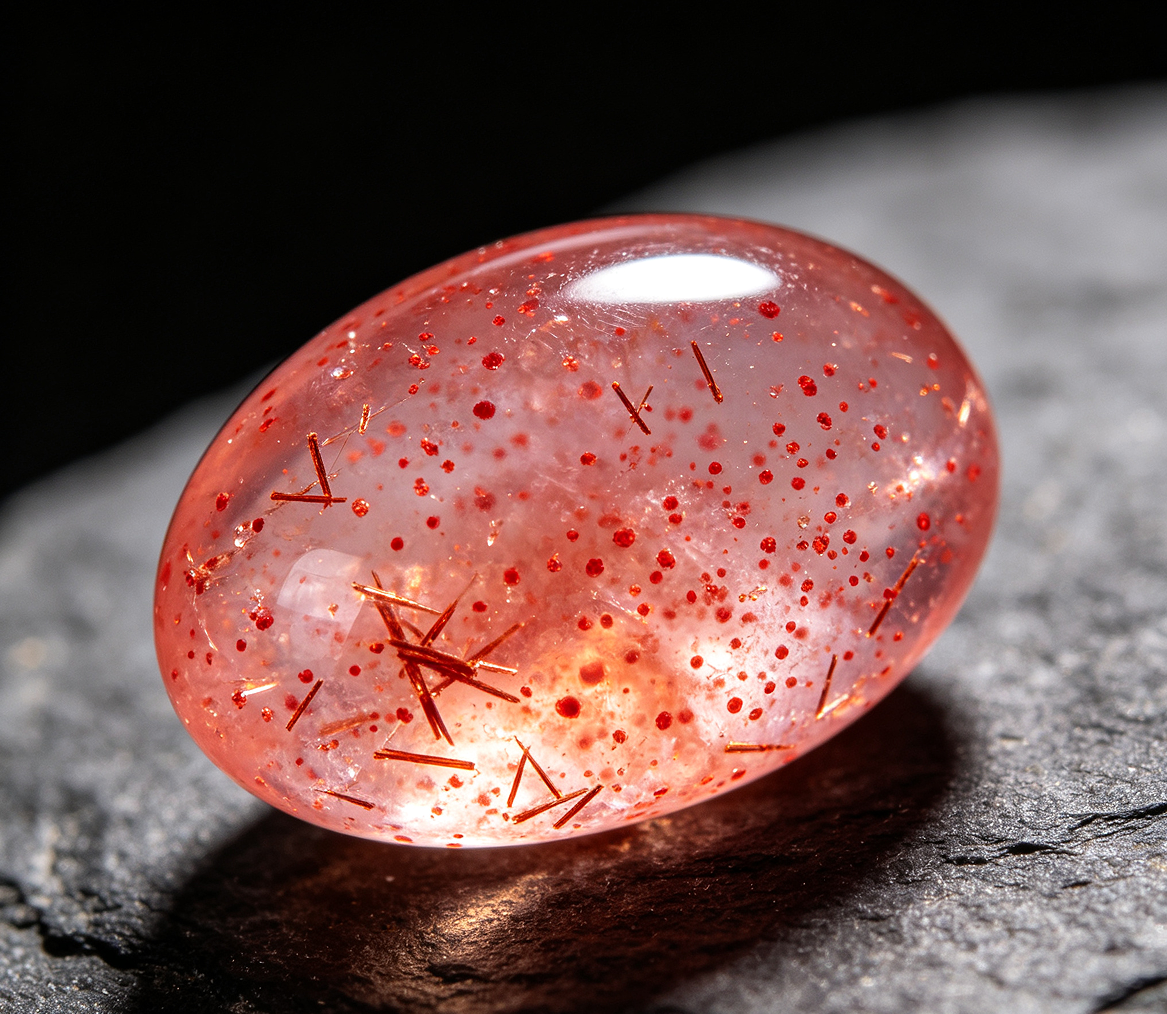
Strawberry quartz is a distinctive ornamental variety of macrocrystalline alpha quartz, defined by its abundant, uniformly distributed microscopic iron oxide inclusions that visually resemble the seeds on the surface of a ripe strawberry. The primary inclusion phases are hematite and goethite, which occur as tiny acicular needles, subhedral platy flakes, or granular dots dispersed throughout the silica host matrix. When incident light strikes these reflective iron oxide particles, they produce a subtle velvety shimmer and a consistent pink to rose-red body color, distinguishing it from clear rock crystal, amethyst and other monochromatic quartz varieties.
It forms primarily in low-temperature hydrothermal vein systems and secondary weathered zones within felsic igneous and regionally metamorphosed rocks. During crystallization, silica-rich hydrothermal fluids precipitate quartz while incorporating dissolved iron impurities, which later oxidize into solid iron oxide inclusions within the crystal lattice. The quality and commercial value of strawberry quartz depend heavily on four factors: the uniformity and density of the red inclusions, the saturation of the pink body color, the clarity and transparency of the host quartz, and the absence of prominent fractures or cloudy patches. Top-grade material features a translucent to transparent body with evenly distributed bright red dot inclusions and a vivid, consistent pink hue.
Gemological & Industrial Applications
In the global gem and jewelry industry, strawberry quartz is a widely popular mid-range gemstone celebrated for its soft romantic color and unique textured appearance. It is most commonly fashioned into round beads for bracelets, polished cabochons for pendants, rings and earrings, and small carved decorative pieces. Its Mohs hardness of 7 gives it excellent durability for everyday wear, making it suitable for all types of jewelry settings. High-grade specimens with exceptional clarity and perfectly uniform inclusions are actively sought after by gem collectors and crystal enthusiasts.
As a variety of quartz, low-grade massive strawberry quartz rock shares the broad industrial applications of common silica raw material: it is used in glass manufacturing, ceramic production, and as a feedstock for industrial abrasives and construction aggregates. However, gem-quality strawberry quartz is exclusively reserved for lapidary, ornamental and collector use.
Cultural Significance
The name “strawberry quartz” derives directly from its striking visual resemblance to a fresh strawberry, with tiny red iron oxide inclusions scattered across a pinkish translucent base just like strawberry seeds. It is a relatively modern addition to the global gem market, rising to mainstream popularity in the 2010s alongside the rapid growth of crystal wellness and spiritual culture worldwide.
In contemporary metaphysical and crystal healing traditions, strawberry quartz is strongly associated with love, compassion, and emotional connection. It is widely regarded as a stone of attraction, believed to foster healthy romantic relationships, strengthen interpersonal bonds, and promote self-love and inner warmth. It is also linked to joy, creativity, and gentle emotional healing, thought to help release stagnant negative feelings and invite positive, affectionate energy.
Historically, quartz in all its varieties has been venerated across human cultures for thousands of years as a stone of clarity, purification, and spiritual energy. Strawberry quartz inherits this ancient symbolic heritage while adding its own distinct association with affection, tenderness and vital warmth, establishing it as one of the most beloved pink gemstones in modern crystal and jewelry culture.