Sunstone
Basic Properties of Sunstone
Mineral Characteristics
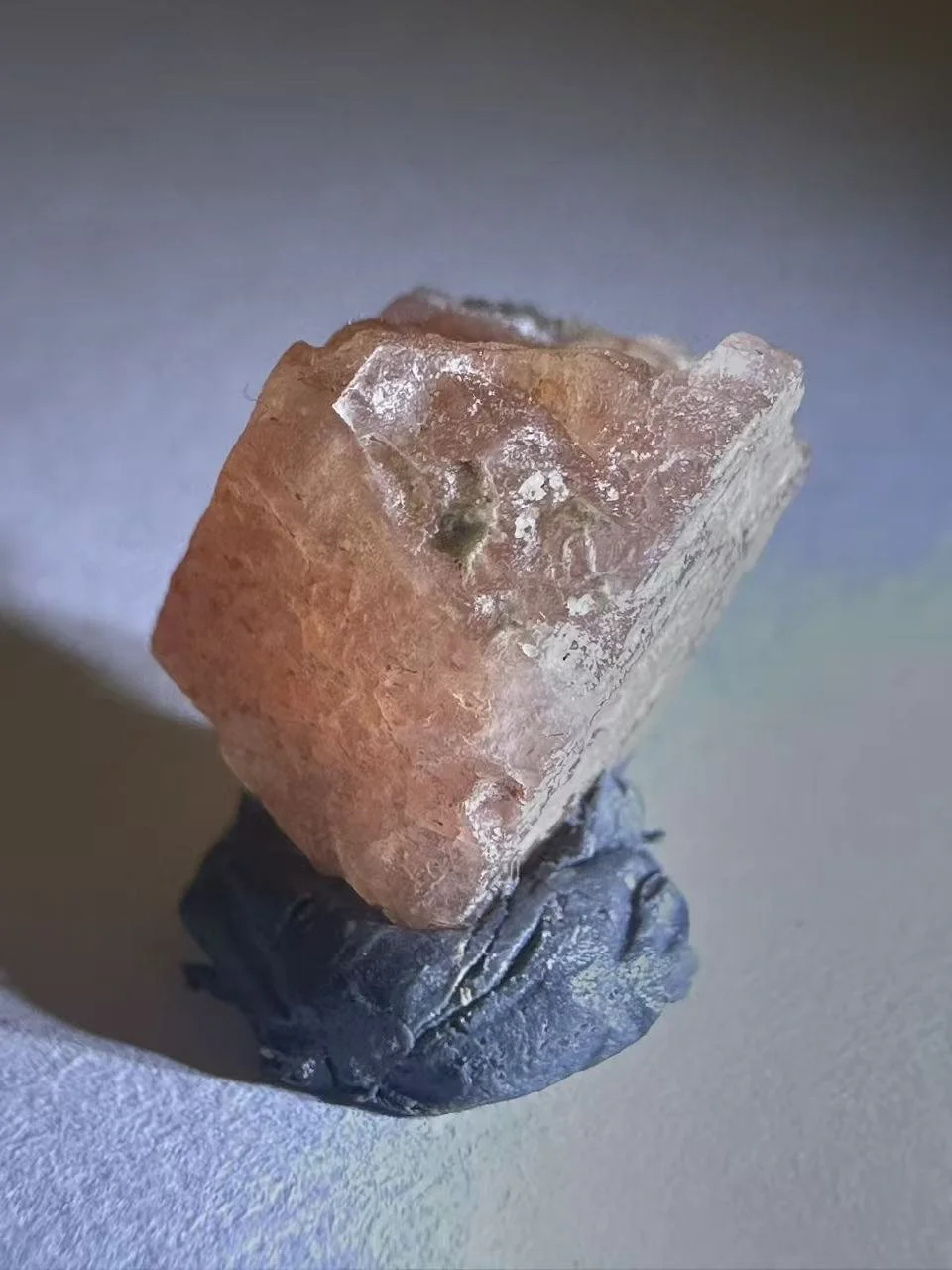
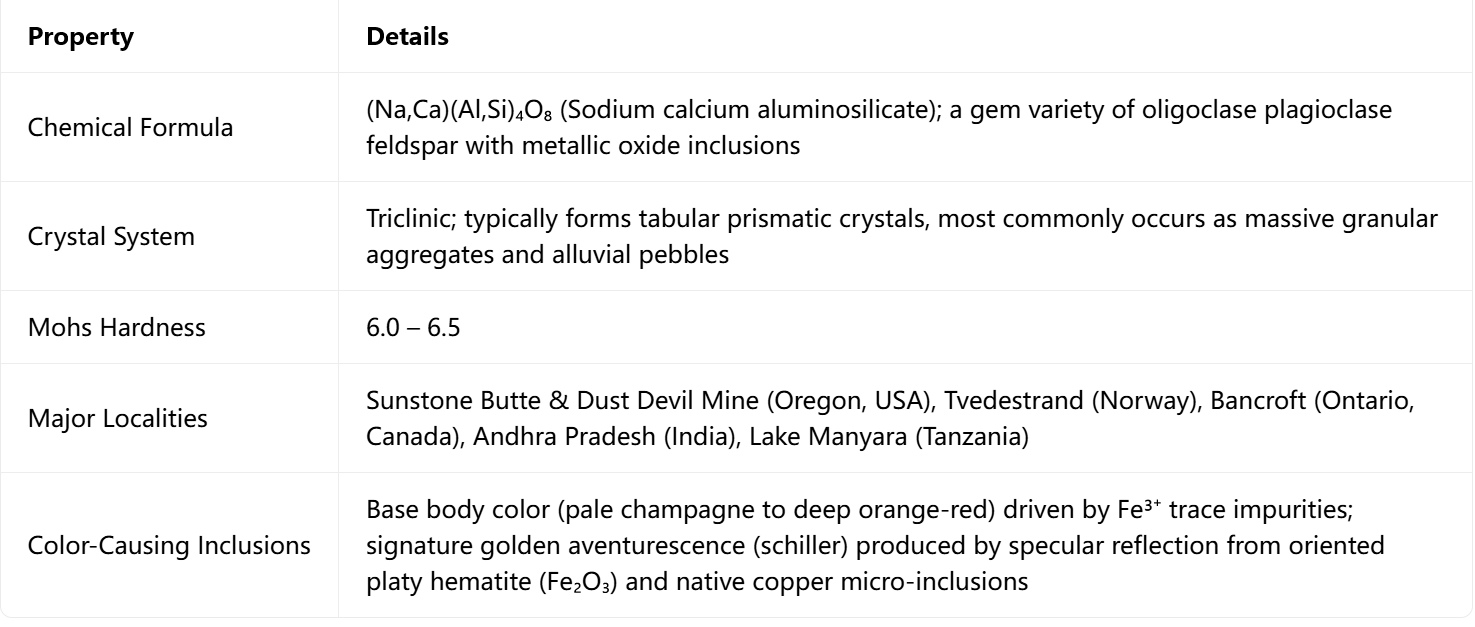
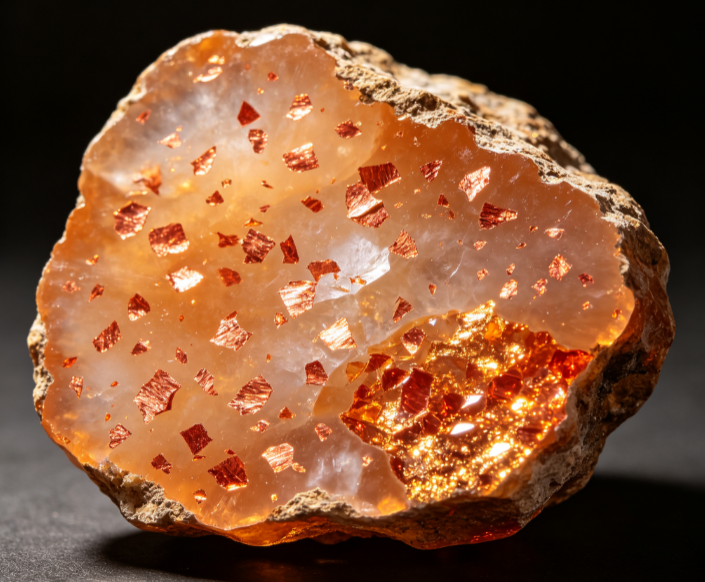
Sunstone is a renowned gem variety of oligoclase, a sodium-dominant member of the plagioclase feldspar group, distinguished by its signature aventurescence — a dynamic, sweeping metallic golden glow that shifts across the stone as it or the light source moves. This optical effect, also referred to as schiller, originates from the specular reflection of visible light off dense, uniformly oriented arrays of microscopic platy inclusions of hematite and native copper embedded within the feldspar crystal lattice. The thickness, density and crystallographic alignment of these platelets directly govern the intensity and hue of the flash, ranging from soft champagne-gold shimmer to vivid coppery-rose sparkle.
Crystallizing in the triclinic system, sunstone exhibits the two sets of perfect cleavage and vitreous luster characteristic of the feldspar group. Most gem-grade material forms in miarolitic cavities within felsic volcanic rocks, hydrothermal vein systems and granitic pegmatites, where protracted crystallization enables the growth of large, transparent feldspar crystals with well-ordered inclusion structures. It is also commonly recovered as rounded alluvial pebbles from secondary sedimentary placer deposits. Geographic variants are well defined: Oregon sunstone is celebrated for its saturated orange-red body tone and prominent copper-bearing schiller, while classic Norwegian material features a pale translucent base with fine, evenly distributed golden sparkle.
Gemological & Industrial Applications
Within the global jewelry trade, sunstone is a distinctive and fast-rising colored gemstone, prized for its warm, luminous appearance and broad accessibility. It is fashioned into both faceted gems and polished cabochons; cabochon cuts are the traditional and most popular choice, as they optimize the visibility of the aventurescent schiller effect. Premium Oregon sunstone with deep body color and uniform, strong flash commands the highest market value, and is widely used in designer rings, pendants, earrings and statement pieces. With a Mohs hardness of 6.0–6.5, it offers adequate durability for regular wear, though its cleavage planes mean it requires moderate care to avoid chipping and abrasion. Rare specimens that combine aventurescence with chatoyancy (a sharp cat’s-eye band) are highly coveted by gem and mineral collectors.
Industrially, bulk oligoclase feldspar serves as a high-volume industrial mineral with wide-ranging applications. It is a primary fluxing agent in ceramic and porcelain manufacturing, a key raw material in glass production, and a functional filler in paints, coatings, plastics and rubber products. Gem-quality sunstone, however, is reserved entirely for lapidary, ornamental and collector use.
Cultural Significance
The name sunstone derives from its striking sun-like golden radiance, and the mineral has carried enduring symbolic ties to solar power, warmth and vitality across human cultures. In Norse maritime tradition, the legendary sólarsteinn — a navigational stone said to reveal the sun’s position even through dense overcast — has been popularly associated with sunstone for centuries, embedding its reputation as a stone of clarity, guidance and protection.
For Indigenous nations of the North American Pacific Northwest, sunstone was a sacred ceremonial stone linked to solar deities, worn as a talisman for strength, courage and abundance. In contemporary crystal healing and metaphysical culture, sunstone is universally embraced as a stone of positivity, leadership and personal empowerment. It is believed to dispel low mood and self-doubt, boost confidence, inspire creative expression, and attract opportunity and prosperity, upholding its ancient identity as a piece of embodied sunlight captured in mineral form.