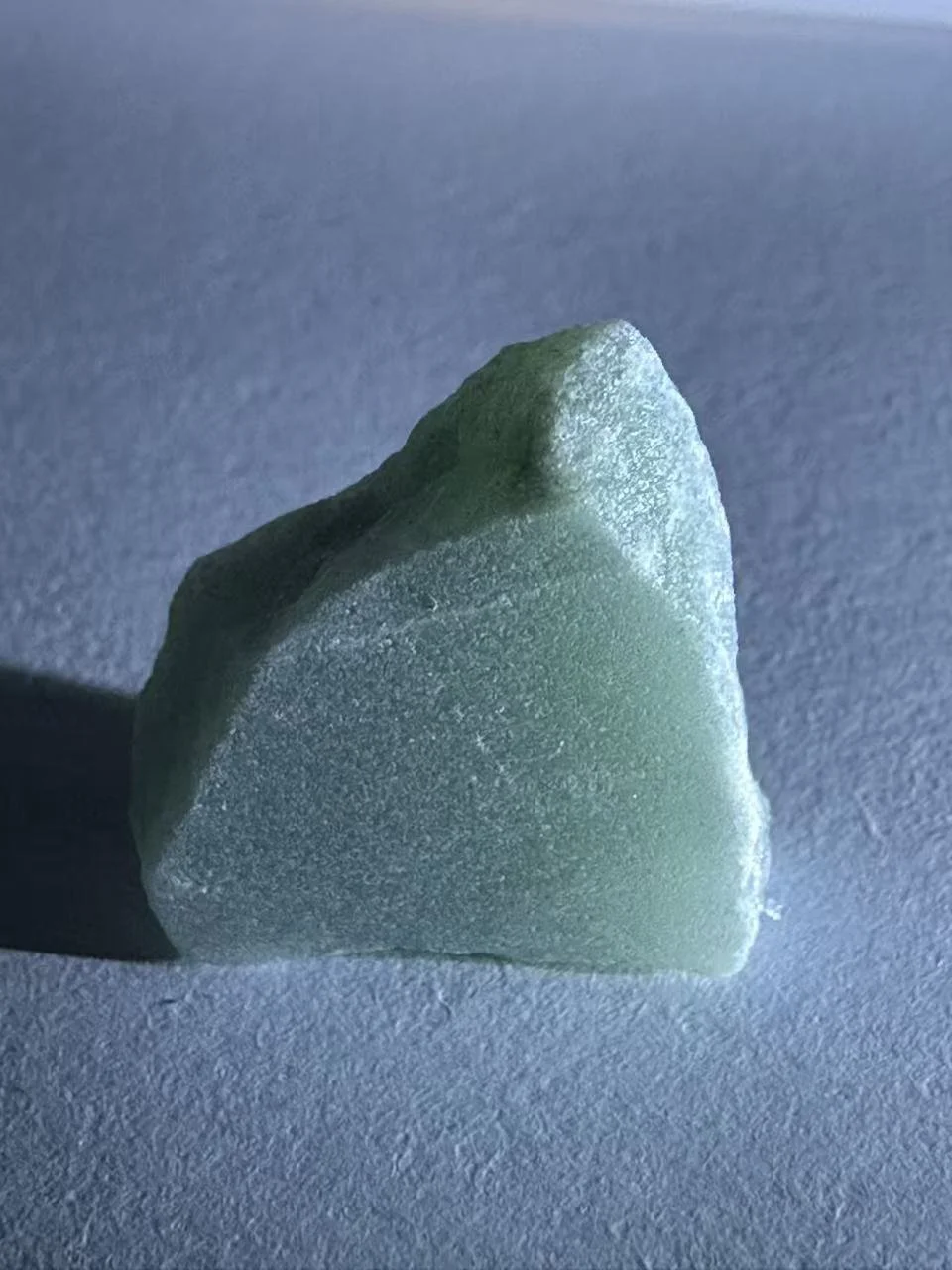
Aventurine
Basic Properties of Aventurine
Mineral Characteristics
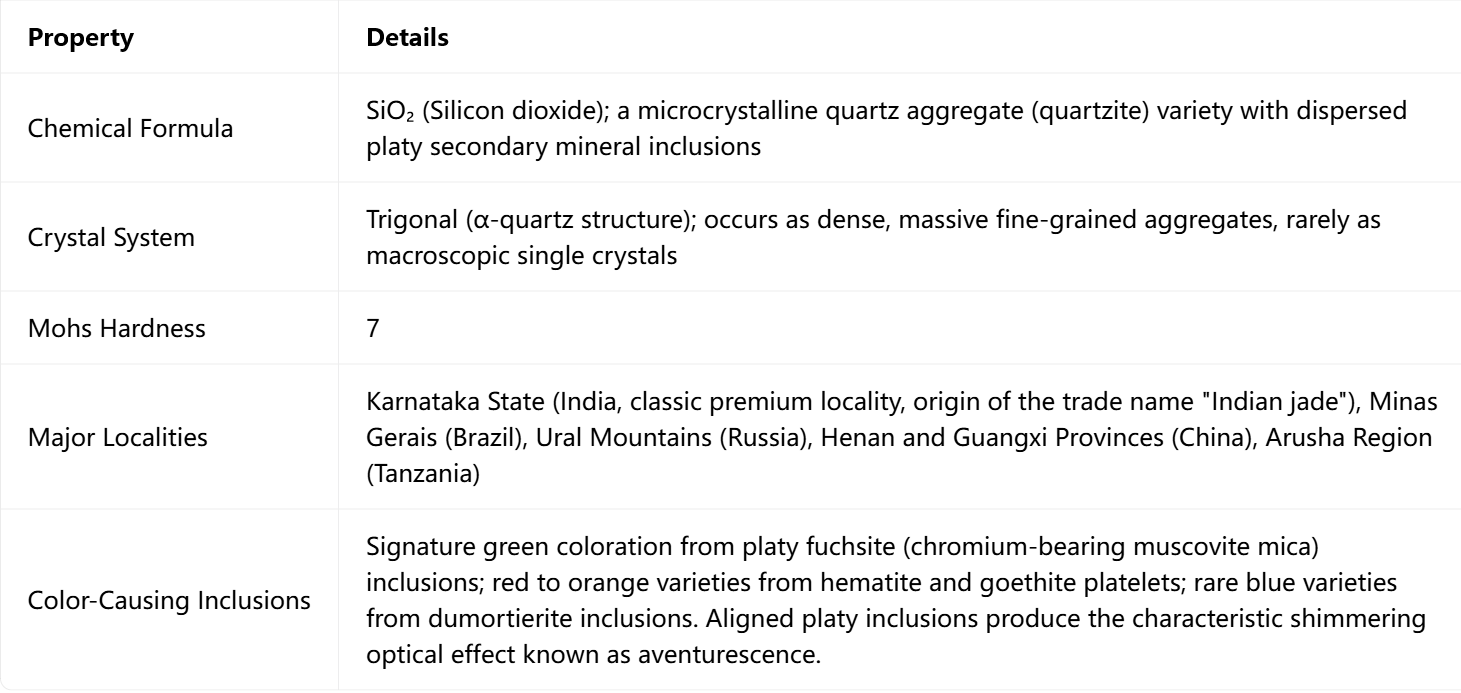
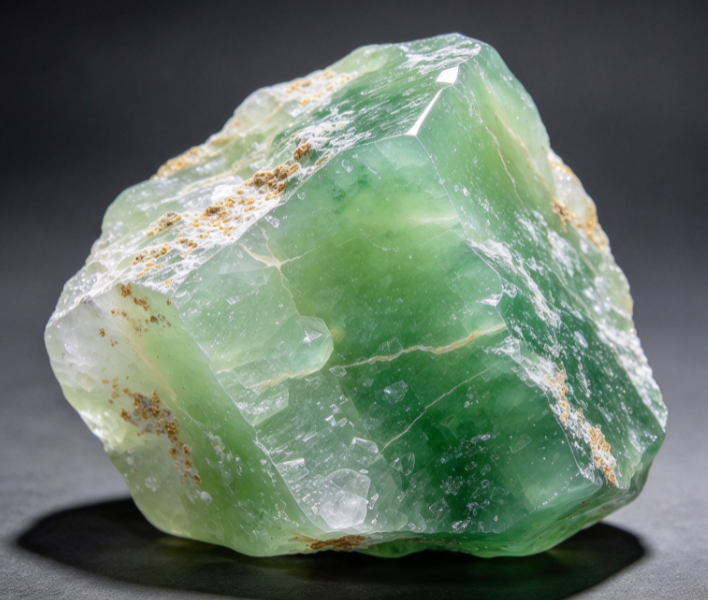
Aventurine, also referred to as aventurine quartz, is a prominent ornamental variety of microcrystalline quartz, belonging to the quartzite group of rocks rather than a discrete mineral species. It occurs as dense, massive, fine-grained aggregates of interlocking α-quartz crystals, typically exhibiting a compact, uniform texture and a vitreous to faintly greasy luster when polished. What distinguishes aventurine from other quartz varieties is its namesake optical effect — aventurescence — a soft, sweeping metallic schiller that glides across the stone’s surface with movement of the specimen or light source.
This characteristic shimmer arises from dense, crystallographically aligned arrays of microscopic platy inclusions dispersed throughout the silica matrix. In the most widespread green aventurine, the reflective inclusions are fuchsite, a chromium-rich muscovite mica. These tiny platy particles become oriented during the diagenesis and low-grade regional metamorphism of quartz-rich sedimentary strata, producing a consistent, velvety golden-green flash when illuminated. Less common color variants include red to reddish-brown aventurine colored by platy hematite inclusions, orange varieties colored by goethite, and rare blue aventurine bearing dumortierite acicular inclusions. The commercial quality of aventurine is graded by four key criteria: the saturation and uniformity of the body color, the fineness and evenness of the aventurescent schiller, the overall translucency and polishability, and the absence of prominent fractures, voids or discolorations.
Gemological & Industrial Applications
In the global gem and jewelry trade, aventurine is a widely popular mid-range ornamental stone, valued for its rich green hue, distinctive shimmer and excellent durability. It is most commonly fashioned into round beads for bracelets and necklaces, polished cabochons for pendants, rings and earrings, and larger carved decorative pieces, figurines and ornamental bowls. Its Mohs hardness of 7 gives it excellent scratch resistance and durability for everyday wear, making it suitable for all types of jewelry settings. Green aventurine is often referred to commercially as “Indian jade” due to its historical production in India and its superficial resemblance to jadeite, though it is mineralogically and materially distinct from true jade. Top-grade material features a deep, even forest-green body color with uniform, fine-grained aventurescence and high polishability.
Industrially, low-grade massive quartzite rock shares the broad applications of common silica raw material. It is used as a feedstock in glass manufacturing, ceramic production, and industrial abrasives, and as a dimension stone for building cladding, flooring and architectural features. High-quality aventurine with consistent color and schiller is reserved exclusively for lapidary, ornamental and collector use.
Cultural Significance
The name aventurine derives from the Italian word avventura, meaning “chance” or “adventure”. The term was first applied to aventurine glass, a man-made glittering glass invented by accident in 18th-century Venice. When natural quartz with the same shimmering effect was later discovered, it adopted the same name, distinguishing it as natural aventurine.
Historically, aventurine has been used as an ornamental stone for thousands of years across cultures. In ancient India, it was carved into amulets, beads and ritual objects, revered as a stone of good fortune and protection. It was widely traded along ancient commerce routes, valued for its warm green color and subtle golden shimmer. In traditional Chinese culture, green aventurine has long been regarded as an auspicious stone associated with wealth, growth and harmony, often carved into decorative ornaments and prayer beads.
In contemporary metaphysical and crystal healing traditions, green aventurine is universally known as the “Stone of Opportunity” and one of the primary stones associated with abundance and good luck. It is believed to attract prosperity, new opportunities and positive outcomes, support emotional healing and heart-centered awareness, and soothe stress and anxiety. It is also linked to personal growth, creativity and renewed optimism, thought to help release old patterns and invite positive change. Across modern crystal culture, it remains one of the most accessible and beloved green ornamental stones, celebrated for its gentle, uplifting energy and timeless natural beauty.