Aquamarine
Basic Properties of Aquamarine
Mineral Characteristics
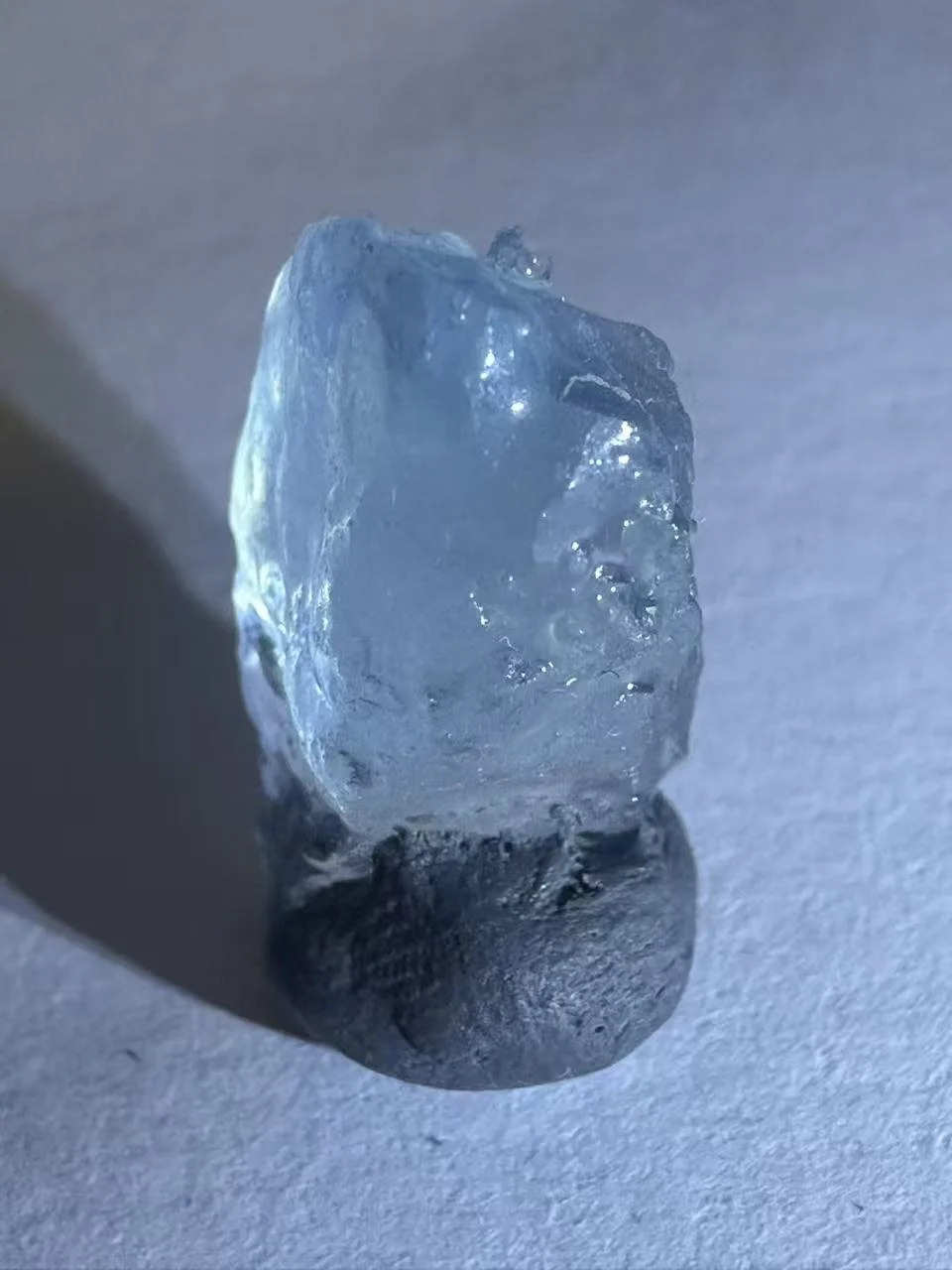
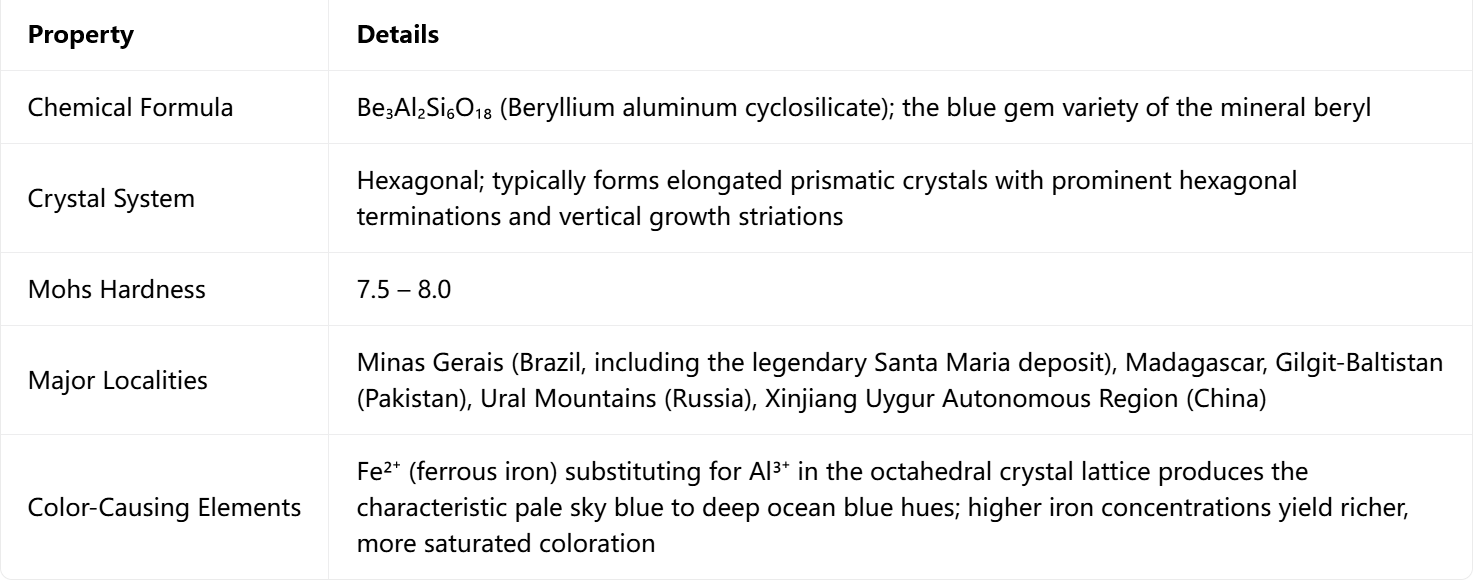
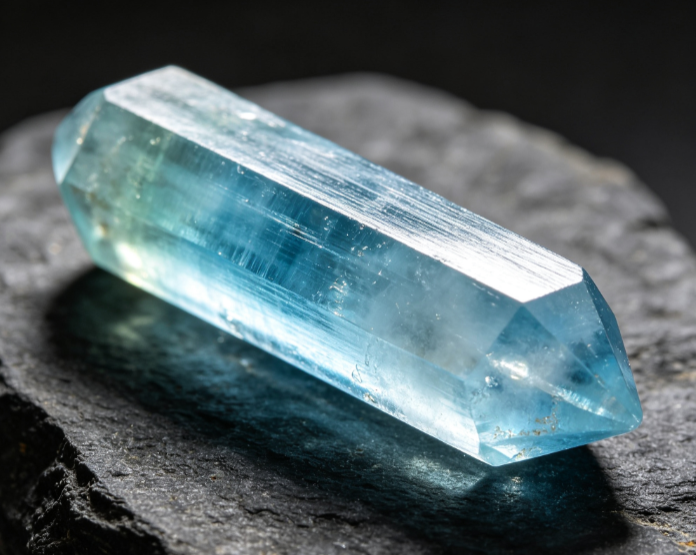
Aquamarine is the prized blue gem variety of the mineral beryl, a cyclosilicate defined by its six-membered silica ring crystal structure. It crystallizes in the hexagonal system, typically forming large, elongated prismatic crystals with flat hexagonal terminations and distinct vertical striations along the prism faces. Fresh surfaces display a vitreous luster, and the mineral exhibits one direction of imperfect basal cleavage. Gem-quality aquamarine forms primarily in open cavities within granitic pegmatites and high-temperature hydrothermal vein systems, where protracted crystallization under low-pressure conditions produces large, optically clear crystals with exceptional transparency.
The signature blue coloration arises from isomorphous substitution: ferrous iron (Fe²⁺) replaces aluminum ions in the octahedral coordination sites of the beryl lattice. The saturation and tone of the blue correlate directly with iron content: pale, nearly colorless material contains only trace iron, while deep, saturated ocean-blue specimens from premium deposits such as Santa Maria in Brazil carry significantly higher iron concentrations. Natural aquamarine often contains characteristic fluid inclusions, negative crystals, and hollow growth tubes referred to as “rain” by gemologists. A rare intensely deep-blue variety called Maxixe aquamarine also exists, though its color is inherently unstable and fades upon prolonged exposure to daylight.
Gemological & Industrial Applications
In the global gem and jewelry industry, aquamarine is one of the most popular and universally recognized blue gemstones, and is the official traditional birthstone for the month of March. It is almost universally faceted to maximize brilliance and color return, with emerald cuts, oval cuts and cushion cuts being particularly popular for showcasing its clean, transparent body and even color distribution. Top-grade material with deep, uniform blue color and high clarity commands premium market prices, with fine Santa Maria aquamarine ranking among the most valuable beryl varieties. With a Mohs hardness of 7.5–8.0 and excellent toughness, aquamarine is highly durable and well suited for all types of jewelry including daily-wear rings, pendants, earrings and luxury statement pieces. Its cool, serene blue tone has made it a perennial favorite among high jewelry houses and contemporary designers alike.
Industrially, common beryl ore is the world’s primary commercial source of the metal beryllium. Beryllium is a lightweight, high-strength strategic metal with critical applications in the aerospace and defense sectors, where it is used in structural components of aircraft, missiles and satellites. It is also essential in the nuclear industry as a neutron moderator and reflector, and in the electronics industry for high-frequency electrical components and X-ray window materials. Lower-grade beryl is also used as a raw material in specialty ceramics, refractory materials and lightweight alloy production. Gem-quality aquamarine is reserved exclusively for lapidary and ornamental use.
Cultural Significance
The name aquamarine derives from the Latin phrase aqua marina, meaning “seawater”, a reference to the stone’s remarkably close resemblance to the clear, blue waters of the open ocean. This association with the sea has shaped the mineral’s cultural symbolism for millennia. In ancient Greek and Roman mythology, aquamarine was believed to be the solidified essence of the sea, sacred to the sea god Poseidon/Neptune. Sailors and mariners carried aquamarine talismans to ensure safe passage across stormy waters, protect against shipwreck, and calm turbulent waves.
Throughout the Middle Ages, aquamarine was valued not only as a protective stone for travelers but also as a stone of truth and foresight. It was believed to enhance intuition, reveal hidden truths, and strengthen the power of prophecy. Medieval healers used aquamarine to treat disorders of the eyes, throat and stomach, and to purify drinking water.
In contemporary culture, aquamarine remains the official March birthstone, symbolizing youth, hope, serenity, loyalty and eternal youth. It is also the traditional gemstone for 19th wedding anniversaries. Within modern metaphysical and crystal healing traditions, aquamarine is regarded as a stone of calm and clear communication, believed to soothe stress, reduce anxiety, promote emotional balance, and enhance self-expression. Its enduring appeal rests on its timeless oceanic beauty, exceptional durability and ancient association with protection, clarity and the power of the sea.